---
title: Peristaltic Pumps with Leak Detection & Duty Standby Operation
description: Improve chemical dosing reliability with peristaltic pumps featuring leak detection and automatic duty/standby operation. Cut downtime and protect your process.
image: https://blog.cwc.com.au/hubfs/Peristaltic%20Pumps%20with%20Leak%20Detection%20%26%20Duty%20Standby%20Systems.png
---
[](https://cwc.com.au/)
**Call for Expert Help** 1800 137 954
[DIGICHEM Plus Login](https://cwc.com.au/pages/cloud-monitoring) [emec Nimbus Login](https://cwc.com.au/pages/cloud-monitoring-nimbus)
[](https://cwc.com.au/)
News + Insights
## Australia Wide!
Exclusive Agent for **emec** in Australia
[VIEW THE EMEC RANGE](https://cwc.com.au/collections/vendors?q=EMEC)
# Peristaltic Pumps with Leak Detection & Duty Standby Operation
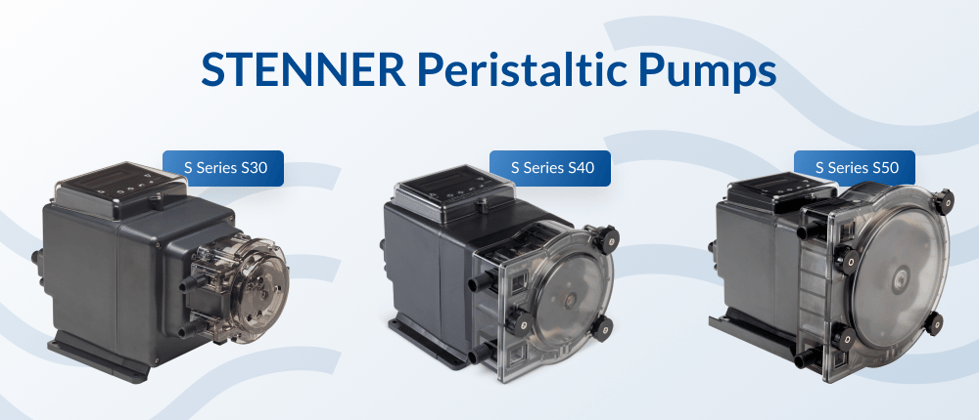
Reliable chemical dosing isn’t just about pump performance, it’s about what happens when things go wrong.
In real-world applications, failures don’t announce themselves in advance. Squeeze tubes wears out.
Pumps stop unexpectedly. And when they do, the consequences can range from minor inefficiencies to major process failures.
That’s why two features play a critical role in modern dosing systems: tube leak detection and automatic duty/standby operation. Together, they ensure you not only detect problems early, but keep your system running when they occur.
To better understand how dosing systems are built and installed, it’s worth reviewing how components like [dosing pump installation kits](https://blog.cwc.com.au/dosing-pump-installation-kits) support reliable system setup.
## The Challenge: Maintaining Reliable Chemical Dosing
Chemical dosing systems are often part of critical operations. Whether in water treatment, industrial processing, or chemical handling.
When a dosing pump fails, the impact can include:
- Loss of chemical control
- Equipment damage
- Environmental or safety risks
- Costly downtime
The key isn’t just preventing failure, it’s being prepared for it.
Many failures actually originate from small installation or connection issues. For example, improper tubing setup can lead to leaks, something covered in more detail in [how dosing pump tube connection kits work](https://blog.cwc.com.au/dosing-pump-tube-connection-kits).
## Tube Leak Detection: Early Warning Where It Matters Most
In peristaltic pumps, the tubing is the primary wear component. Over time, it degrades due to continuous compression, chemical exposure, and operating conditions.
When tubing fails, the risks are immediate:
- Chemical leakage
- Loss of dosing accuracy
- Potential damage to surrounding equipment
This is where integrated leak detection becomes essential.
## How Leak Detection Works
The S Series monitors the pump head directly and identifies leaks as they happen.
When a leak is detected, the system responds instantly:
- A clear **TUBE LEAK alarm** is displayed
- The pump can be configured to **stop or continue running**
- A signal is sent via **output relays to alarms or control systems**
## What This Means in Practice
The S Series monitors the pump head directly and identifies leaks as they happen.
When a leak is detected, the system responds instantly:
- Immediate awareness of faults
- Reduced risk of chemical spills
- Protection of downstream processes
Minimising leak risks is also a key focus in system design innovations such as [chemical dosing skid technology improvements](https://blog.cwc.com.au/re-inventing-chemical-dosing-skids-with-dice-technology), where reducing connection points helps prevent failures before they occur.
## Automatic Duty/Standby Operation: Built-In Redundancy
Detecting a failure is only half the solution. The next step is ensuring the process continues without interruption.
That’s where automatic duty/standby operation comes in.
How It Works
That’s where automatic duty/standby operation comes in.
- A **primary pump** handling normal operation
- A **secondary pump** in standby mode
If something goes wrong, the system automatically switches over.
Switchover Triggers Include:
- Power loss
- Drive fault
- Pump stoppage (such as a leak event)
The Result
- Continuous chemical dosing
- No manual intervention required
- Higher overall system uptime
In applications where power availability is also a concern, alternative technologies like [water powered dosing pumps](https://blog.cwc.com.au/mixtron-water-powered-dosing-pumps) can offer additional reliability benefits.
## Why These Features Work Better Together
Individually, leak detection and standby operation are valuable. Together, they create a far more resilient system.
Combined Benefits
- Fault detection with automatic response
- Reduced downtime
- Lower operational risk
- Seamless integration with control systems
Communication options such as relay outputs, 4–20 mA signals, and Modbus allow the system to integrate easily into existing PLC or SCADA environments.
## Real-World Impact on Operations
For facilities managing chemical dosing, these features directly translate into:
- Fewer unplanned shutdowns
- Improved process stability
- Reduced maintenance intervention
- Lower total cost of ownership
Whether it’s a water treatment plant, industrial facility, or chemical processing system, maintaining uptime is critical.
- **Leak detection** ensures small problems are identified before they become major failures
- **Duty/standby operation** ensures the process continues even when failures occur
Together, they transform a standard pump into a reliable, process-critical dosing solution.
Because in chemical dosing, reliability isn’t just about performance, it’s about resilience.
[](https://blog.cwc.com.au/hs/cta/wi/redirect?encryptedPayload=AVxigLLOw6gM9r38ehwb4blV9dm%2BdQf%2B0GHsX8pi%2FgpImDeX5ovirVz%2BBPglbSmSAURtweW0ejPUFkaAvIiIx2kv3IDA2BvEOL9BKRcxIZNZEAXMftS1nf81Ga3dVXVqsLYP%2F%2F6SOO14W5kChHfE2ByQ4QjIOPMH2UaAQCkeV6Ox5gxhQlvnbCap9j2wrNEZHIpfwANaF5%2FRQt%2Fvi7l4Lo3lJpmtjXwRRug3Ia5cDNXGfQ%2BEYUkAfNs%3D&webInteractiveContentId=296695720387&portalId=4586940)
#### Larry Narunsky
[Follow me on LinkedIn](https://www.linkedin.com/in/larrynarunsky/)
Technical Director at Convergent Water Control, brings nearly 30 years of experience in the electronics industry spanning product design, prototyping, production, and technical support. With deep expertise in industrial automation, instrumentation, and chemical dosing systems, he excels in product management, business planning, and technical operations. Larry’s strong engineering background and leadership ensure the development of compliant, high-quality products and the delivery of exceptional technical support across every stage of a product’s lifecycle.
### Subscribe
### Recent
- [The Value of Very Low Dose Chemical Dosing in Industry](https://blog.cwc.com.au/very-low-dose-chemical-dosing)
- [Peristaltic Pumps with Leak Detection & Duty Standby Operation](https://blog.cwc.com.au/peristaltic-pump-leak-detection-duty-standby)
- [Which Level Sensor Should I Choose – Ultrasonic or Radar?](https://blog.cwc.com.au/ultrasonic-vs-radar-level-sensors)
- [Benefits of Online Corrosion Monitoring in Addition to Using Corrosion Coupon Racks](https://blog.cwc.com.au/benefits-of-online-corrosion-monitoring)
- [Smart Boiler Feedwater Monitoring with Guardian IK-2000 Series](https://blog.cwc.com.au/blog/guardian-ik2000-boiler-feedwater-monitoring)
[](https://blog.cwc.com.au/hs/cta/wi/redirect?encryptedPayload=AVxigLIgaLR0e4ECGy%2Ft6ZykBCnoRx1M8Lj%2BRIra6gTxJGfeU%2BI1Ngo0%2BRC91QTlQ%2FeR2TILvLskIWTbOwFmoPeu2j8htl0waasUF3CSI3lFNCouVJbwcpJZU5gRxonO14vP7ESM5V0WIVZubQ35iTZ1PDXiIMI3Zab8GN2jEMod1qnwlILoCl7ZrKpcFo2Ye6StGbfoEgoQDkN29I8BL7mziJ0Pb7bwpZBInmteZAZVx6ROcyGBb93xHbqbgHYtrKI%3D&webInteractiveContentId=200206963780&portalId=4586940)
### Topics
- [News & Insight](https://blog.cwc.com.au/tag/news-insight)
- [pH Correction](https://blog.cwc.com.au/tag/ph-correction)
- [Chemical Dosing Pumps](https://blog.cwc.com.au/tag/chemical-dosing-pumps)
- [Solenoid Metering Pump](https://blog.cwc.com.au/tag/solenoid-metering-pump)
- [Hanna HI931001](https://blog.cwc.com.au/tag/hanna-hi931001)
- [Peristaltic Dosing Pumps](https://blog.cwc.com.au/tag/peristaltic-dosing-pumps)
- [Water Powered Dosing Pump](https://blog.cwc.com.au/tag/water-powered-dosing-pump)
- [CWC News](https://blog.cwc.com.au/tag/cwc-news)
- [Chemical Dosing](https://blog.cwc.com.au/tag/chemical-dosing)
- [Stenner Pumps](https://blog.cwc.com.au/tag/stenner-pumps)
- [pH/ORP Simulator](https://blog.cwc.com.au/tag/ph-orp-simulator)
- [Boiler Blowdown](https://blog.cwc.com.au/tag/boiler-blowdown)
- [DIGICHEM](https://blog.cwc.com.au/tag/digichem)
- [ORP](https://blog.cwc.com.au/tag/orp)
- [Pool Controllers](https://blog.cwc.com.au/tag/pool-controllers)
#### Product Groups
- [Systems](https://cwc.com.au/collections/systems)
- [Instrumentation](https://cwc.com.au/collections/controllers-and-sensors)
- [Chemical Pumps](https://cwc.com.au/collections/chemical-dosing-pumps)
#### Customer Service
- [Privacy Policy](https://cwc.com.au/policies/privacy-policy)
- [Fair Use Policy](https://cwc.com.au/policies/terms-of-service)
- [Contact Us](https://cwc.com.au/pages/contact)
#### Information
- [Company Overview](https://cwc.com.au/pages/company-overview)
- [Brand Directory](https://cwc.com.au/pages/brand-directory)
- [ISO Accreditation](https://cwc.com.au/pages/accreditation)
[](https://connect.cwc.com.au/iso-accreditation)
-
-
-
- [](mailto:support@cwc.com.au?subject=Website-Enquiry)
---
© 2026 Convergent Water Controls Pty Ltd. All rights reserved.
Scroll To Top